 Brand

What Is Customer Journey Mapping?
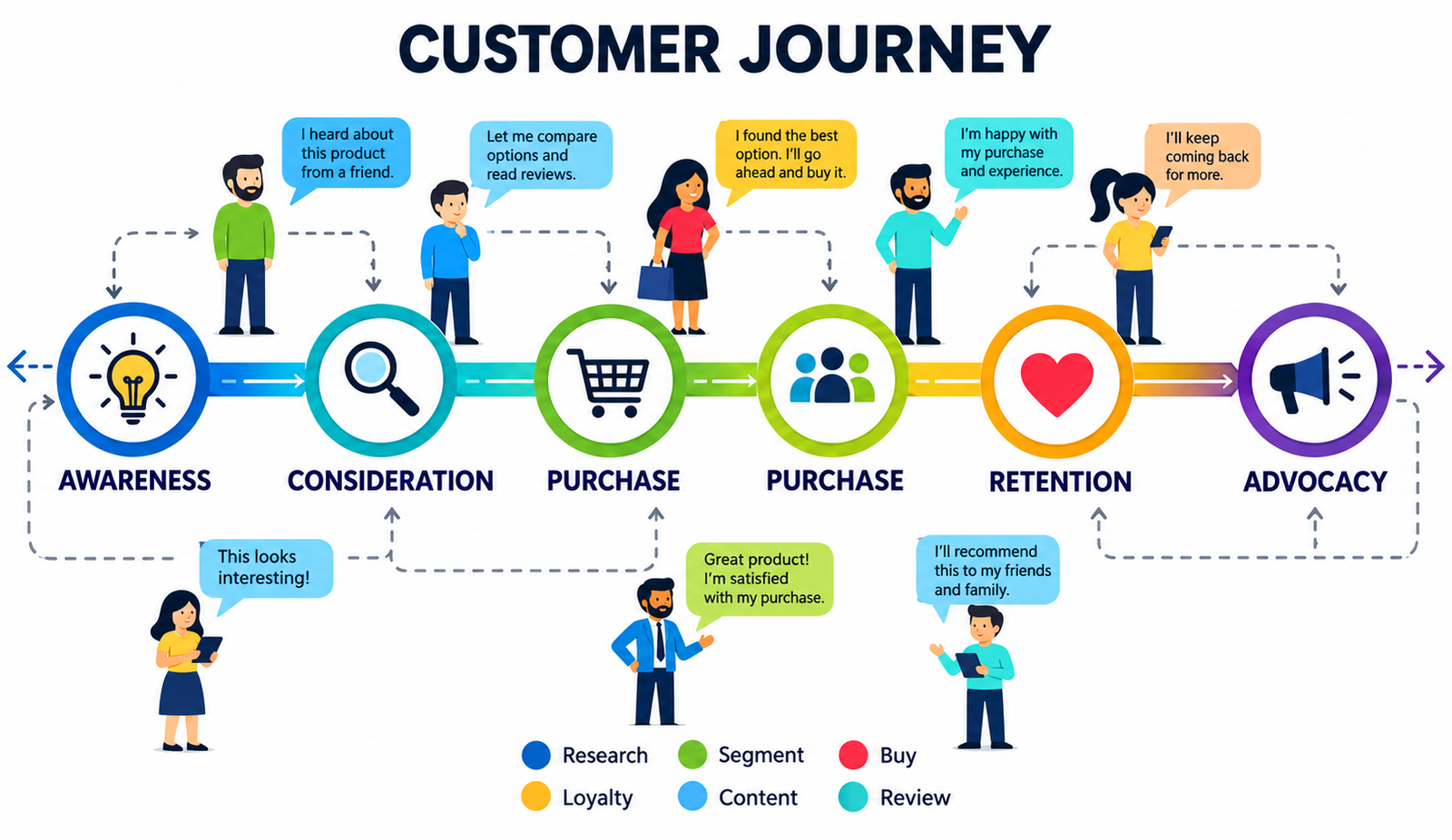
Customer journey mapping is the process of creating a simple visual or written picture of the different steps a customer takes before, during, and after buying a product or service.
Customer journey mapping helps you to stop thinking about "How do I sell?”
What are customers feeling?
What might stop customers from taking the step?
This shift in mindset changes everything.
When you focus on the customer you stop pushing products.
You start solving problems.
People buy from businesses that help them not just sell to them.
Here are four key reasons why customer journey mapping matters:
1. You Understand Your Customer Better:
You see the journey from the customer’s point of view.
Not your business’s point of view.
That helps you create content, better ads and better offers.
For example if a customer keeps leaving your website without buying you can check the decision stage.
Maybe your pricing is not clear.
Maybe your call to action is weak.
You can fix it.
2. You Can Improve Your Marketing Strategy:
You stop guessing what works.
You start knowing what works.
You can see which channels bring customers to which stages.
You can see which messages make customers move forward.
You can see where customers drop off.
Then you can change your strategy.
You can spend more on the tools that work.
You can fix the tools that don't.
3. You Build Trust Faster:
When a customer feels understood they trust you more.
If you show up at the moment with the message customers feel like you are listening.
Customers feel like you care.
That builds trust.
Trust leads to sales.
Trust leads to repeat business.
4. You Create a Better Customer Experience:
A journey means frustrations.
Fewer mistakes.
Fewer questions.
When the journey works well the customer feels good.
Customers feel supported.
Customers feel like they made the choice.
When customers feel good they stay longer.
Customers buy more.
Customers tell others.
This is how you grow your business.
Final Thoughts
Customer journey mapping is not a task.
It does not require budgets or expensive tools.
It starts with one idea:
Think like your customer.
How to Create Your First Customer Journey Map?
Step 1: Choose One Customer
Don't try to map every possible customer.
Choose one specific customer type.
For example:
"Small business owner looking for digital marketing services."
Step 2: Identify Their Problem
Ask:
What problem causes this customer to start searching for a solution?
Understanding this helps you create better content.
Step 3: List Their Online Actions
Think about what they might do online.
Do they:
- Search Google?
- Watch YouTube videos?
- Use Instagram?
- Read reviews?
- Visit websites?
- Contact businesses through WhatsApp?
Write these actions down.
Step 4: Match Marketing to Each Stage
Now connect your marketing activities to the journey.
For example:
Awareness ? Instagram content
Consideration ? Website + testimonials
Decision ? Offer + WhatsApp
Retention ? Email + customer support
This helps ensure that you're not using the same marketing message for everyone.
Step 5: Find the Problems
Finally, ask:
"Where could the customer get stuck?"
Maybe your website doesn't explain pricing.
Maybe your contact form is difficult to use.
Maybe customers don't receive a follow-up after purchasing.
These are opportunities to improve the customer experience.

The 4 Main Stages of a Digital Customer Journey?
A Simple digital custmor journey can be divided into four major stages:
Awareness Consideration Decision Retention
1. Awareness: "I Have a Problem"?
The journey begins when a person becomes aware of a problem, need, or desire.
At this stage, they may not even know your business exists.
For example, imagine someone wants to improve their fitness. They might search Google for:
"How can I lose weight?"
Or they might see an Instagram Reel about simple home workouts.
This is the awareness stage.
Businesses can use:
- Instagram and Facebook posts
- YouTube videos
- Blog articles
- Google search content
- Educational Reels
- Online advertisements
- "5 Reasons Your Business Isn't Getting Enough Leads."
The goal is not always to say, "Buy now."
2. Consideration: "Which Solution Is Right for Me?"
Once customers understand their problem, they start looking for possible solutions.
For example, our fitness customer might search:
- "Best gym near me"
- "Personal trainer vs gym"
- "Best fitness apps"
- "Online fitness coaching reviews"
They are now considering their options.
3. Decision: "I'm Ready to Buy"
What can businesses use?
Common tools include:
- Special offers
- Free consultations
- Free trials
- Clear pricing
- Strong testimonials
- WhatsApp buttons
- Contact forms
- Landing pages
- Email offers
- Clear calls to action (CTAs)
A call to action simply tells the customer what to do next.
4. Retention: "Should I Come Back?"
Retention means keeping existing customers interested, satisfied, and connected with your business.
A happy customer may:
- Buy again
- Renew a subscription
- Recommend your business
- Leave a positive review
- Follow you on social media
Final Thoughts:
Customer journey mapping doesn't have to be complicated.
Start with four simple stages:
"Awareness ? Consideration ? Decision ? Retention".

0 Comments
No comments yet. Be the first to share your thoughts!
Leave a Comment