 Brand
E-commerce has reimagined the way people shop. With the ability to discover, compare and review products with just a few clicks of a button, the modern-day consumer has a lot of power – and businesses need to know how to effectively market their online store to attract and convert these customers.
Whether you are just starting out or you already have an online store up and running, having the right marketing strategy can help you drive traffic to your website, boost sales and grow your business.
In this article, we will look at effective ways to market your online store and increase sales, especially if you are a beginner.

What Is E-commerce Marketing?
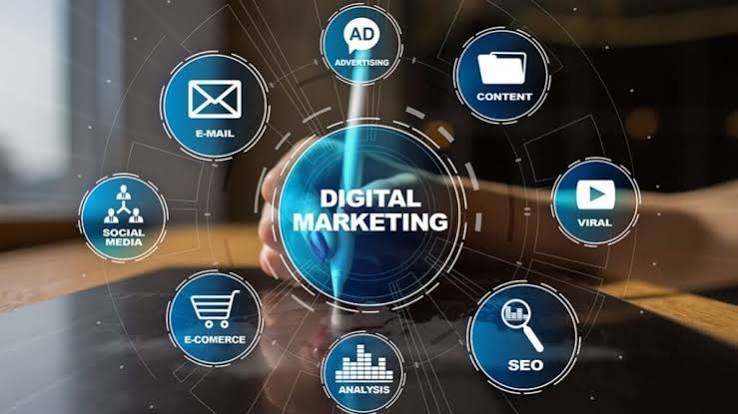
E-commerce marketing refers to marketing activities carried out to promote an online store and its products. These marketing activities can be carried out through various online marketing channels including;
• Search engines
• Social media
• Influencer marketing
• Paid ads
• Retargeting
• Customer reviews
• Offers and discounts
• And many more
The ultimate aim of any e-commerce marketing initiative should be to drive traffic to your online store and convert them into paying customers.
For example, a customer may stumble upon your product on Instagram, search your brand on Google, visit your website, add the product to their cart and make the purchase after receiving a reminder email. All these are marketing activities that would fall under the umbrella of e-commerce marketing.
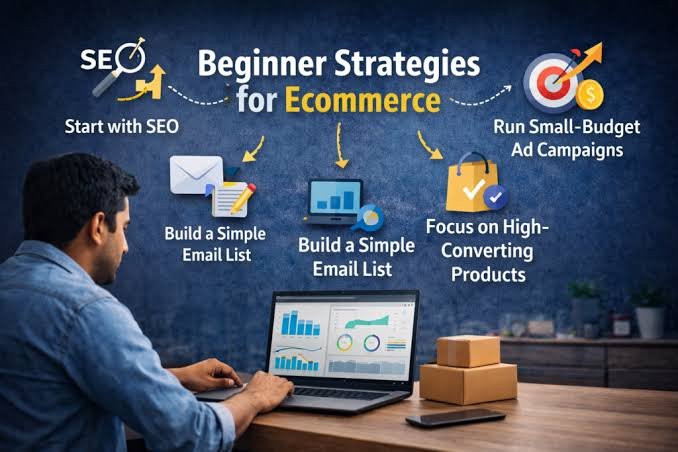
Here are some simple and effective e-commerce marketing strategies for beginners.
1. Know Your Audience
Before jumping into any marketing campaign, it is important to understand who your target audience is. In other words: who are the people that are most likely to buy your product or service?
Knowing your audience will help you with targeting your ads, choosing what to post on social media, choosing what offers to create and much more.
Ask yourself the following questions:
• Who are my ideal customers?
• What are their interests, hobbies, and challenges?
• What problems am I solving?
• Which age group are my customers in?
• What types of products are they looking for?
• Where are they likely to be found online?
• What are their preferences when it comes to brands like mine?
By knowing who you are marketing to, you will be able to create the right message, post the right content, run the right ads and offer the right deals that would persuade them to choose your brand over your competitor’s.
Remember, you can’t be all things to all people. Focus on targeting the audience that is most likely to buy from you.
2. Focus On Having A Great Website
Your website is usually the first thing that a prospect interacts with – so you need to ensure that it is designed in a way that encourages them to make a purchase.
While you might have invested in eye-catching ads that lure prospects to your website, it is the website that ultimately makes or breaks the sale. Here are a few things to consider;
Your website should be easy to navigate
Your website should be mobile responsive
Make sure your website loads fast
It should have simple language that is easy to understand
It should be easy to checkout and have trust-building features such as testimonials and security badges.
Make sure that your website product pages are easy to understand and include important information such as;
Product name
Images
Product description
Price
Sizes and colors available
Benefits
Customer reviews
Delivery information
Warranty and returns
An easy-to-find “Add to cart” button
In short, make your website user-friendly in order to enhance the customer experience.
3. Leverage The Power Of SEO
SEO (Search Engine Optimization) can play a huge role in catapulting your online store to the top of search engine results pages (SERPs) for relevant search terms. SEO helps your online store appear in search results when relevant queries are entered into Google and other search engines. For example; if someone searches “best running shoes for men”, your running shoe product page or blog post will show up in the SERPs.
Start by optimizing your online store for search engines. You can start by including keywords in your;
Product titles
Product descriptions
Blog posts
Page titles
Meta descriptions
Image alt text
Website URLs
Consider publishing blog posts related to your niche. This can help you attract people searching for specific topics related to your business.
For example, if you run a clothing store, you can publish blog posts such as;
How to style a white shirt?
How to choose the right jeans?
Best outfits for casual parties and more

4. Harness The Power Of Social Media
It is no surprise that social media has taken the world by storm – and it has given businesses a powerful avenue to market their products and services. Some of the most popular social media networks that businesses use to market their online stores include;
YouTube
Among others
While most companies use social media to promote their products, you should go beyond just posting pictures of your products.
Consider publishing more engaging content such as;
Product reviews
Videos
Tutorials
Product comparisons
Before and after content
Behind-the-scenes content
Frequently asked questions
User-generated content
Unboxing videos
And many more
If you sell kitchen products for instance, you can post short videos on Reels or TikTok showing your prospects how your product can solve their cooking problem. This is a much better way to encourage customers to make a purchase as opposed to simply telling them to buy your product.
5. Invest In Paid Advertising
Organic marketing (non-paid marketing) can sometimes take a while before it starts yielding results. With that said, paid marketing can help you reach your target audience faster and get results in a relatively short time.
Some of the most popular online ad networks that you can use to advertise your online store include;
Meta (Facebook, Instagram, WhatsApp and more)
YouTube
Shopping and marketplace ad networks.
With the aid of ad networks, you can easily target your ads to people based on their;
Interests
Location
Age
Gender
Behaviors and more
For example, if you run a sports shoe store, you can target people who are interested in sports. However, it is important to note that you should not start by blowing all your marketing budget on ads. It is a good idea to start with a small budget, test some ads, see what works, and then scale the winning ad.
You should also track the right metrics including;
Click-through rate (CTR)
Cost per click (CPC)
Conversion rate
Cost per purchase (CPP)
Return on ad spend (ROAS)
This way, you will be able to see what works and what doesn’t and optimize your campaigns.
6. Offer Discounts And Coupons
Most customers are often hesitant to purchase products because of the fear that they are paying more than they should. However, you can overcome this hurdle by introducing discounts and coupons to incentivize customers to buy from you. Some of the most effective types of discounts and coupons that work really well for e-commerce sites include;
First-time buyer discount
Limited-time offers
Buy one get one free (BOGO)
Free shipping on eligible orders
Festival discounts
Bundle deals (buy more and save)
Loyalty program discounts
For example, you can offer a 10% first-time buyer discount or a free shipping deal on all orders above ?999.
However, avoid undercutting your prices all the time. If you keep discounting your prices, customers will start to expect a deal and will be reluctant to purchase from you if the “discount code” is not flashing.
7. Develop An Email Marketing Campaign
Email marketing is one of the most cost-effective and powerful marketing channels that can significantly boost sales for your online store. With email marketing, you can connect and build a long-term relationship with your customers.
For example, after someone has made a purchase on your online store, you can send them an email introducing yourself and thanking them for choosing your business.
You can also use email to;
Remind customers about products that they have abandoned in their cart
Send them product recommendations based on their purchase or browsing history
Announce new products, promotions and special offers
Share useful and informative content related to your niche
Send birthday wishes and gifts
And much more
8. Encourage Product Reviews
Most customers are skeptical of new products and only decide to purchase after seeing what other people are saying about them. That is why product reviews are such a powerful tool for boosting sales.
With that said, you should make it easy for your customers to leave product reviews. You can also encourage them to share their reviews on social media, post pictures of your product, make unboxing videos or share video reviews.
You can highlight some of the best written reviews on your product page or share video reviews on your social media page. For example, a customer may say “I received the package today and the item was better than I expected”. This can help influence other prospects to make a purchase.
Customer reviews carry a lot of weight and can help boost your conversion rate.
9. Leverage The Power Of Influencer Marketing
Influencer marketing is a great way to market your online store with minimal risk, especially if you are a beginner. When done correctly, influencer marketing can help you tap into a captive audience that is already trusting of the influencer’s recommendations.
When choosing an influencer to work with, avoid the temptation to solely focus on influencers with a large following. A mid-tier influencer (with a following between 20k – 50k) can provide a much better return on investment than a macro influencer with 1 million followers.
For example, a local influencer may have 20,000 followers who are really into fashion. You can collaborate with them to create engaging content such as product reviews, unboxing videos, tutorials, Reels and more.
You can even ask the influencer to share a unique discount code for their audience.
This way, any customer that decides to purchase through the influencer’s link will provide you with a steady stream of sales.
10. Use Retargeting To Re-Engage Prospects
Not everyone who visits your website converts. In fact, most people who visit your website are not ready to make a purchase. However, you can use remarketing (also known as retargeting) to re-connect with these prospects.
For example, you can use retargeting ads to remind prospects of the product that they browsed on your website but failed to purchase. This can entice them to go back to your website and complete the transaction.
Retargeting is a great way to remind prospects of your brand without annoying them.
11. Simplify The Checkout Process
Some customers abandon their carts because the checkout process is too cumbersome. Make it as simple as possible for your customers to checkout. Avoid collecting too much information about the customer. You should also make sure that the following information is available;
Product price
Delivery charges
Taxes or any other additional charges
Delivery policy
Warranty and return policy
Customers should know exactly what they are paying for and what the terms and conditions of their purchase are.
12. Create A Loyalty Program
It is said that it is much easier to sell to an existing customer as opposed to acquiring a new customer. With that said, you should think about creating a loyalty program that rewards customers for purchasing from you.
The loyalty program should include incentives such as;
Points for every purchase
Referral rewards (for every friend that a customer refers and buys from you).
Birthday rewards
Special member discounts
Early access to new products and more
For example, your loyalty program can reward a customer with points for every shillings spent. The more points a customer accumulates, the more they can redeem in discounts or rewards.
13. Focus On Creating Content
Content marketing is a great way to drive traffic to your online store without having to hard sell your products. Content marketing should focus on providing value to your customers by answering their questions. Some of the most effective types of content marketing for an e-commerce business include;
Blogging
Video creation (YouTube, TikTok, Instagram Reels)
Social media posts
Product reviews
How-to-guides and tutorials
Product comparisons
E-books
For example, if you run a fitness store, you can create content such as; “beginner-friendly fitness tips”, “how to get in shape at home”, “how to choose the right fitness equipment”, “a beginner’s guide to fitness” and much more.
Your potential customers may stumble upon your interesting content, decide to follow you and eventually visit your website to make a purchase.
14. Monitor Your Marketing Campaigns
Many beginners make the mistake of blindly throwing money into marketing while ignoring analytics. Regardless of the marketing channel that you are using, it is important to constantly track statistics and analyze the performance of your marketing campaigns.
For example, you should track;
Number of website visitors
Conversion rate
Number of views for each product
The add-to-cart rate
Checkout rate
Sales per customer
Average order value
Customer acquisition cost
Repeat purchases
This way, you will be able to see what marketing activities are driving the most traffic and sales to your online store and what changes need to be made in order to improve performance. If your website has 10,000 monthly visitors but only 20 sales, it means something is going wrong with your sales funnel.
15. Personalize The Customer Buying Experience
Everyone wants to feel special and customers are no exception. Personalization goes a long way in creating a great impression of your brand.
For example, if a customer is interested in beauty products, avoid recommending them technology gadgets. You can use personalization to recommend products that are relevant to what the customer is interested in. Personalization can also be used to send targeted emails, product recommendations, special offers, recently-viewed products and more.
Even simple personalization tactics can improve the customer experience tremendously.
Common E-Commerce Marketing Mistakes To Avoid
Regardless of how good your marketing strategy is, it is important to avoid these common e-commerce marketing pitfalls.
Avoid focusing on price
Avoid neglecting mobile users
Avoid using unprofessional-looking images
Avoid making checkout difficult
Avoid failing to follow up with your customers
Final Thoughts
Marketing an online store requires more than just uploading products and hoping that sales will magica
0 Comments
No comments yet. Be the first to share your thoughts!
Leave a Comment