 Brand
One month I went into a showroom to buy a washing machine. I had already checked prices on the brand’s website. I had put two models in my cart. I even talked to someone on WhatsApp. The salesperson in the store asked what I was looking for as if we had never seen each other. I had to start over. I ended up buying from that store.
That one moment shows more about Omnichannel Marketing than any explanation.

What is Omnichannel Marketing really?
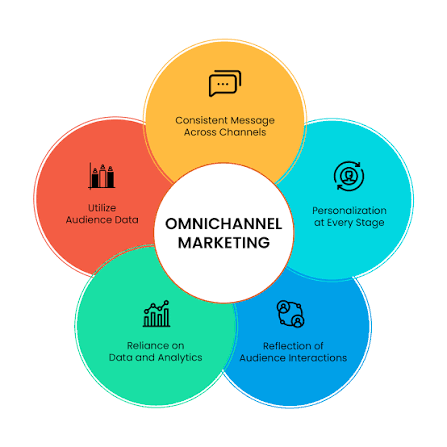
Omnichannel Marketing means every place a customer meets a brand works like one connected conversation. Website, Instagram, WhatsApp, email, store, phone call, ads. Customers do not think in channels. Customers think "this is the brand." Customers expect the brand to remember them.
Do not confuse Omnichannel Marketing with multichannel. Multichannel means a brand is present on places. Omnichannel Marketing means those different places talk to each other. A brand can be on ten channels. That brand still delivers an experience if each channel works by itself.
Why it is important now
People rarely follow a path to buying. Someone sees a video searches the brand two days reads reviews clicks a retargeting ad and messages on WhatsApp to ask about delivery. That is four or five points of contact before the money changes hands. If each point treats a customer like a stranger the brand loses the customer somewhere in the middle. The brand never knows where the loss happened.
Brands that connect these points see more customers stay, higher spending and fewer complaints. Omnichannel Marketing is not magic. Omnichannel Marketing reduces problems.
Start with one view of the customer
Everything starts with data. Not just in a way. A brand needs one place where a customer’s details live: name, phone number, what the customer bought what the customer looked at which messages the customer opened. Many small businesses keep these details spread out. Orders are in an Excel sheet leads are in someone’s phone the email list is in Mailchimp and questions are in Instagram DMs.
Choose one CRM. Make that CRM the main source of information. Every channel should add information to that CRM. Every channel should get information from that CRM. When a customer messages on WhatsApp the team should see that customer’s purchase history without asking. That one change alone makes the customer feel known.
Map the journey
Sit with the team. Draw how customers actually find and buy from the brand. Not how the brand wishes customers would act. Look at data. Ask buyers to look at the brand’s chat history. Patterns appear quickly.
Maybe most customers find the brand on Instagram. Maybe customers trust the brand after seeing Google reviews. Maybe customers ask about pricing on WhatsApp. Maybe customers pay through the website.
Once the path is clear the brand can find the problems. Where do customers leave? Where do customers repeat themselves? Where does the handover feel awkward? Fix those problems first.
Keep the message the same but not the same
Consistency does not mean copying and pasting. An Instagram story and an email newsletter need styles and lengths. What should stay the same are the tone, the offer, the pricing and the promise. If an ad says twenty percent off the website shows a price the trust breaks instantly. Nothing harms a brand faster than contradicting itself.
Create rules: how the brand speaks how the brand says hello, how the brand handles complaints. Share those rules with everyone who talks to a customer, including the person replying to comments at night.
Personalize with smart thinking
Personalization is often too much. The basics work. Use the customer’s name. Do not send a first?time buyer an email that treats the buyer as a regular. If a customer leaves a cart remind the customer gently on the channel that the customer actually uses. If the customer always opens WhatsApp but never reads email stop sending emails with offers.
Also know when to stop. Following a customer around the internet with the ad for weeks feels wrong not helpful. Limits on how ads appear exist for a reason.
Make handoffs smooth
The test of Omnichannel Marketing is the handoff. A customer starts with chat. Wants a call. Does the person on the phone know what the customer already said? A customer orders online. Wants to return in store. Can the staff find that order, in seconds?
Write down the handoffs. I think you will see. Test them yourself. Place an order raise a complaint ask for a refund and watch what happens. The brand will discover problems within an hour that no dashboard would ever show.
Use automation. I have found that. Keep people around. Tools can send reminders follow?ups order updates and birthday wishes without anyone typing a word. That is good. Automation should do the tasks, not the people. An angry customer needs a person quickly so make it easy to reach a person. A chatbot that traps people in a loop causes harm than having no chatbot at all.
Track what actually matters. I have noticed that. Do not just count likes and clicks per channel. Look at the journey. Track customer lifetime value, repeat purchase rate, response time and the number of touches it takes to make a sale. Compare customers who use channels with customers who use only one. Usually the multi?channel customers spend more. Customers stay longer which shows that the connected approach is working.
Review the data every month. Make changes. Do not wait for a report to find out something broke back in March. A small business can do this too. I know that. People think omnichannel is for companies with lots of money. It is not. A local clinic, a shop or a training center can start small. Collect every inquiry in one list or in a CRM. Reply quickly on WhatsApp. Send reminders for appointments. Follow up after the visit with a thank you and a request for a review. Remember birthdays. None of this needs software just effort and a little organization.
Omnichannel marketing is not about being. It is about being consistent and remembering the person, on each part. Customers forgive a lot. Customers do not forgive repeating themselves to a brand that claims to care. Start with one view of customers. Fix the handoff gap. Build from there. Do that well. The experience starts to feel like one conversation of ten disconnected ones. That is what customers come back for. I hope you find this useful.

0 Comments
No comments yet. Be the first to share your thoughts!
Leave a Comment