 Brand
Receiving a lead feels exciting. Receiving a lead marks the beginning.
Many businesses err by assuming that a lead who fills out a contact form sends a WhatsApp message or requests a product price will instantly turn into a customer. In truth most people require time before a lead is ready to buy.
A lead might be comparing businesses checking prices reading reviews asking friends for recommendations or simply trying to see if your product or service is right for them.
This is where lead nurturing becomes essential.
Lead nurturing means building a relationship, with a lead by providing information answering a leads questions and staying connected until a lead's ready to make a purchase.
In this article we will examine practical lead nurturing strategies that truly work for beginners and small businesses.

What Is Lead Nurturing?
What Is Lead Nurturing?
Lead nurturing is the process of communicating with a lead after the lead first shows interest in your business.
For example imagine a lead visits your website and fills out a form asking about your website development service. That lead becomes a lead. However the lead may not be ready to purchase. By contacting a lead and then forgetting about the lead you can:
* Send information
* Answer the leads questions
* Share examples of your work with the lead
* Explain your pricing to the lead
* Send customer testimonials to the lead
* Follow up with the lead at the time
* Offer a consultation or demo to the lead
These activities help a lead understand your business and gradually build trust.
The goal is not to force a lead to buy. The goal is to help a lead move from "I'm interested" to "I'm ready to buy."
Why Is Lead Nurturing Important?
Not every lead is ready to purchase. Some leads may be ready today while other leads may need weeks or months.
For example a lead searching for a website development company may be at stages:
Stage 1: "I need a website."
Stage 2: "Which companies provide website development?"
Stage 3: "How much does a website cost?"
Stage 4: "Which company should I choose?"
Stage 5: "I am ready to start."
If your business only contacts a lead during Stage 1 you may lose the opportunity.
Lead nurturing helps you remain connected to a lead throughout the leads decision-making process. It also helps your business build trust. Ask a lead "Are you ready to buy?"
1. Understand Your Leads:
The first step in lead nurturing is understanding who your leadsre
Not every lead has the needs. For example a digital marketing agency may receive leads from:
* business owners
* E-commerce companies
* Startups
* Restaurants
* Shops
* Real estate businesses
* Institutions
Each lead may have problems. A restaurant owner may want customers while an e-commerce lead may want online sales.
Therefore try to understand:
* What does the lead need?
* What problem is the lead trying to solve?
* What is the leads budget?
* How quickly does the lead need a solution?
* What questions does the lead have?
* What is stopping the lead from making a decision?
The better you understand your leads the relevant your communication will become.
2. Divide Leads Into Groups:
One of the lead nurturing strategies is segmentation. Lead segmentation means dividing leads into groups based on their interests or behavior.
For example:
New Leads
People who have just contacted your business. Send them:
* Welcome messages
* Basic information
* Service details
* Helpful guides
Interested Leads
People who have visited your website times or asked questions. Send them:
* Case studies
* Testimonials
* Product comparisons
* FAQs
Hot Leads
People who have requested a quotation, demo or meeting. Send them:
* Pricing information
* Consultation options
* Detailed proposals
* Follow-up messages
This makes your communication more relevant. It prevents you from sending the message to every lead.
3. Follow Up Without Being Annoying:
Follow-up is one of the parts of lead nurturing. However there is a difference between following up and spamming.
If a lead has contacted your business do not simply send:
“Any update?”
Instead provide something. For example:
Hi! I just wanted to see if you had a chance to review the website development details. I am also sharing examples of websites we worked on recently. If you have any questions feel free to ask.
This approach gives the customer a reason to keep the conversation going.
A simple follow-up schedule could be:
Day 1: Thank the customer for contacting you.
Day 3: Share useful information.
Day 7: Send a case study or a testimonial.
Day 14: Ask the customer if they need help or have questions.
The exact timing depends on your business and on the sales cycle.
4. Provide Valuable Content
Content is one of the ways to nurture leads.
Of promoting your product teach your audience something
For example: if you sell SEO services you could create content such as:
-How SEO helps businesses.
- SEO mistakes.
- How long SEO takes.
- How to choose an SEO agency.
- SEO checklist for beginners.
This type of content helps potential customers understand their problem and your solution.
Useful content can include:
- Blog articles.
- Videos.
- Reels.
- Infographics.
- Guides.
- Case studies.
- FAQs.
- Checklists.
When people consistently receive information from your business they may begin to see your company as a source than another seller.
5. Use Email Marketing:
Email is still a channel for lead nurturing.
For example: when someone downloads your guide you can add them to an email sequence.
A simple sequence might look like this:
Email 1 – Welcome
Thank the person. Deliver the promised resource.
Email 2 – Education
Explain a problem related to your product or service.
Email 3 – Solution
Explain how businesses can solve that problem.
Email 4 – Proof
Share a customer story, result, testimonial or case study.
Email 5 – Offer
Invite the person to book a call request a quote try a demo or purchase.
This creates a journey of sending emails.
6. Use WhatsApp for Quick Communication
For businesses WhatsApp can be a lead nurturing channel.
Customers often prefer WhatsApp because it is quick and convenient.
For example after someone requests a quotation you can send:
“Hi! Thank you for contacting us. We have received your requirement. Here are the service details and a few examples of our work. If you have any questions we're happy to help."
You can also use WhatsApp to:
- Confirm enquiries.
- Answer questions.
- Share product information.
- Send appointment reminders.
- Provide updates.
- Follow up on quotations.
However avoid sending messages.
Your communication should be useful and relevant.
7. Build Trust With Social Proof:
People are buying from businesses they trust.
One way to build trust is through proof.
Social proof shows customers that other people have already used and benefited from your product or service.
Examples include:
- Customer reviews.
- Testimonials.
- Case studies.
- Before-and-after examples.
- Client logos.
- Ratings.
- Project results.
For example we provide marketing services.
You could show: "We helped a business increase enquiries through a combination of social media content and lead generation campaigns."
Specific examples are usually more useful than claims.
8. Personalize Your Communication
People do not want to feel like they are receiving the message as everyone.
Try to personalize your communication whenever possible.
For example "Dear Customer check out our services."
Try, "Hi Arun, based on your requirement for media management I am sharing our content plan and some recent examples."
Simple personalization can make communication feel more relevant.
You can personalize messages using information such, as:
- Name.
- Business type.
- Product interest.
- Enquiry.
- Location.
- Interaction.
Always use customer information responsibly and only where appropriate.
9. Answer Questions Before Customers Ask:
Many leads do not purchase because they still have questions.
For example:
- How much does it cost?
- How long does it take?
- What is included?
- Is there a contract?
What happens after payment? Can I cancel? Do you provide support?* Create content that answers these questions.
Your website can include an FAQ section.
Your sales team can maintain a list of questions.
Your emails and WhatsApp messages can also provide answers.
The important doubts a customer has the easier it becomes for them to make a decision.
10. Use Lead Scoring:
As your business grows you may receive hundreds or thousands of leads.
It becomes difficult to identify which leads need attention.
Lead scoring can help.
Lead scoring means giving points to leads based on the actions they take.
For example:
* Website enquiry: +10 points
* Pricing page visit: +5 points
* Product demo request: +20 points
* Downloading a guide: +5 points
* Booking a consultation: +25 points
A lead with a score might be showing interest in buying something.
Your sales team can then focus on the leads that're more active.
Keep in mind that lead scores are signs not guarantees that someone will make a purchase.
11. Create Customer Journeys:
A lead nurturing system should not treat every person the way.
For example someone interested in SEO should receive information about SEO.
Someone interested in website development should receive information about websites.
You can design customer journeys like:
SEO Lead ? SEO Guide ? SEO Tips ? Case Study ? Consultation
Website Lead ? Website Examples ? Pricing Guide ? Case Study ? Consultation
Social Media Lead ? Content Examples ? Social Media Tips ? Results ? Proposal
This makes your marketing more relevant.
12. Know When to Stop Following Up:
Lead nurturing does not mean contacting someone every day.
If a person keeps ignoring your messages it might be better to stop sending messages.
You can send a message like:
“Hi! We haven’t heard back from you so we’ll stop following up for now. If you need help in the future feel free to contact us.”
This keeps the relationship professional. Avoids messages.
13. Measure Your Results
You cannot get better at lead nurturing if you don’t measure it.
Track numbers such as:
Lead-to-Customer Conversion Rate
How many leads eventually become customers?
Email Open Rate
How many people open your emails?
Click-Through Rate
How many people click the links in your messages?
Response Rate
How many leads respond to your messages?
Sales Cycle
How long does it take for a lead to become a customer?
Cost Per Lead
How much does it cost your business to get each lead?
These numbers help you see what is working and what needs change.
Simple Lead Nurturing Example
Let’s say a digital marketing agency gets a lead from Instagram.
The customer says: "I want help with media marketing."
The agency could create this plan:
Day 1: Thank the customer. Ask about their business.
Day 2: Share information about services.
Day 4: Send examples of social media work.
Day 7: Share an article about building a media strategy.
Day 10: Share a client case study.
Day 14: Offer a consultation.
This way the customer receives information at times of being pushed to buy away.
Common Lead Nurturing Mistakes
Businesses that use lead nurturing can make mistakes.
Sending Messages
many messages can annoy customers.
Only Talking About Your Product
Your communication should give value, not just sell.
Not Following Up
Some businesses get leads but never contact them again.
Sending the Same Content to Everyone
Different customers have needs.
Ignoring Old Leads
Some older leads might be ready to buy.
Not Tracking Results
Without measurement you won’t know which strategies work.

Final Thoughts:
Lead nurturing is not about forcing people to buy.
It is, about building trust giving value staying in touch and helping potential customers make a decision.
A good lead nurturing strategy can start with steps:
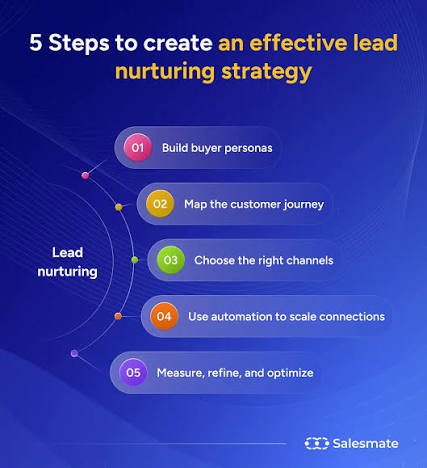
1. Understand your leads.
2. Divide your leads into groups.
3. Follow up with your leads at the time.
4. Share content with your leads.
5. Use email and WhatsApp the way with your leads.
6. Show customer reviews and case studies to your leads.
7. Make your communication personal for your leads.
8. Answer questions from your leads.
9. Track lead activity carefully.
10. Measure your results with your leads in mind.
You do not need a system to start.
Even a simple spreadsheet or CRM can help you keep track of who has contacted your business what your leads are interested, in when you last reached out to each lead and what you should do next.
As your business grows you can add automation lead scoring, email sequences and CRM workflows for your leads.
The main idea is simple: do not treat every lead as a question. Treat each lead as the beginning of a relationship.
When you keep giving information to your leads at the time you give potential customers a better reason to trust your business and to keep talking.

0 Comments
No comments yet. Be the first to share your thoughts!
Leave a Comment