 Brand
Online advertising has changed a lot over time. Back in the day buying an advertisement meant you would contact a website talk about the space agree on a price and then place the ad by hand. Today most of this process can happen automatically. This is where programmatic advertising comes in.
Programmatic advertising is a technology method for buying and selling advertising space. Of negotiating each ad placement by hand, software and automated systems help advertisers find good opportunities and buy advertising space that matches specific targeting needs.
You may have seen advertising without ever knowing about it. When you visit a website and see a banner ad that feels related to your interests that ad may have been delivered by an advertising system.
Programmatic advertising can look complicated when you first hear about it.. The basic idea is simple: technology lets businesses buy digital advertising space automatically and show ads to the right audiences. In this article I will explain what programmatic advertising means how it works, the main platforms involved its benefits, its limits and how beginners can see advertising’s role in digital marketing.
What Is Programmatic Advertising?
Programmatic advertising is the automated buying and selling of advertising inventory. Advertising inventory means the space where ads can appear.
This can include:
- Website banner advertisements
- Mobile advertisements
- Video advertisements
- Connected TV advertisements
- In-app advertisements
- advertisements
- Native advertisements
Instead of a marketer calling each website owner and buying ad space by hand programmatic technology can automate most of that work. Advertisers can set the type of audience they want to reach their budget, locations, devices, interests and other campaign details. The system then finds advertising opportunities that match those details.
For example a sportswear company may want to reach people who like fitness and running. The advertiser can create a campaign with the targeting and budget settings.
When an eligible advertising opportunity appears automated systems can check whether that opportunity matches the campaign. If it does the ad can be delivered.
How Does Programmatic Advertising Work?
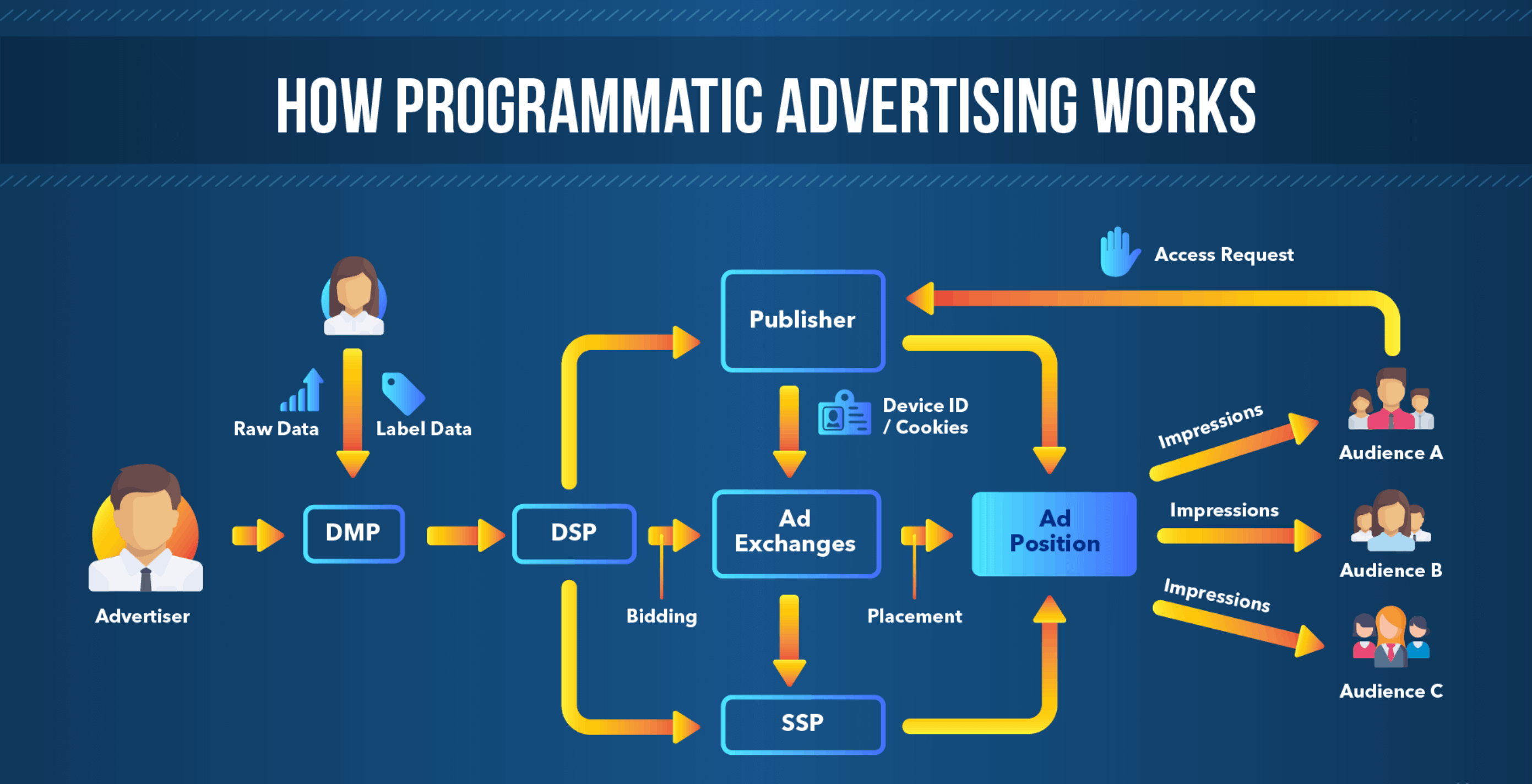
The easiest way to understand advertising is to imagine what happens when someone opens a website. Suppose a person visits a news website. The website has an advertising space. The website offers that advertising opportunity through an advertising system. Different advertisers may want to reach people who match the visitor’s audience criteria.
An automated auction or buying process can happen in a short time. The advertiser that wins the opportunity can show its ad to the visitor. The whole process can happen quickly. The basic journey looks like this:
User visits website ? Advertising opportunity becomes available ? Advertisers compete through automated systems ? Suitable ad is selected ? Ad appears
This can happen in milliseconds. The visitor usually does not see the buying process happening behind the scenes.

What Is an Ad Impression?
Before learning more about advertising it helps to know what an "impression" means. An impression usually means that an ad has been shown to a user. For example if an ad appears on a website and loads, for a visitor that can count as an impression according to the platform’s measurement system. Advertisers can buy impressions. Use other pricing models depending on the platform and campaign. The goal is not just to generate impressions. The key is reaching the audience and hitting the campaign goal.
What Is Real-Time Bidding?
Real-time bidding called RTB is a key part of programmatic advertising. It lets advertising opportunities be bought and sold through automated auctions. Imagine someone opens a website. An ad space becomes available. Multiple advertisers may want to show their ads to that visitor. Their systems can evaluate the opportunity based on campaign settings. Bid accordingly. The winning ad can then be shown. This process happened quickly. Real-time bidding is one piece of the larger programmatic advertising ecosystem. Programmatic advertising can also use buying methods and agreements.
Programmatic Advertising vs Traditional Advertising
Advertising often needs more manual effort. I have seen this For example a company might reach out to a website directly. Buy a banner placement for a set period. The company may agree on: I think these terms matter.
* Advertisement size
* Placement
* Duration
* Price
* format
Programmatic advertising can automate most of this process. Advertiser can use technology to buy advertising opportunities based on audience and campaign requirements. I think this makes it easier. This can make digital advertising more flexible and scalable. However traditional direct advertising can still be useful when a business wants a placement, publisher relationship or guaranteed advertising environment. I know many businesses prefer this.
Main Parts of Programmatic Advertising
Several different technologies and platforms can be part of advertising. I find this variety helpful.
Demand-Side Platform
A DSP is a system that advertiser and agency can use to buy advertising inventory. I find DSPs useful. A DSP can help advertiser manage campaigns, targeting, bidding, budgets and reporting. I have seen this in action. Of manually buying advertising space from many individual websites an advertiser can use a DSP to reach advertising opportunities across many sources.
Supply-Side Platform
A SSP is usually used by publisher to manage and sell their advertising inventory. I understand this. For example a publisher can have advertising space across its website or app. An SSP can help make that inventory available to buyers.
Ad Exchange
An ad exchange is a marketplace that connects buyers and sellers of advertising inventory. I think it is efficient. It can help the buying and selling process between advertiser and publisher.
Data and Audience Signals
Programmatic advertising can use signals and audience data to decide which advertising opportunities are relevant. I see how this works. Depending on platform and privacy rules these signals can include data, location, device data, website activity and other allowed data. Modern advertising is more focused on privacy- methods and first-party data as the digital advertising environment changes.
What Is Targeting in Programmatic Advertising?
Targeting is one reason business uses programmatic advertising. I believe targeting drives success. Of showing an advertisement to everyone advertiser can try to reach a more relevant audience. I think this is smart. Targeting can include factors such as:
Location
A business may want to reach people in a specific city, region or country. I know this is common. For example a restaurant in Thanjavur may focus its advertising on people in a local area.
Device
Advertiser can sometimes target users based on devices such as phones, tablets or computers. I find device targeting useful.
Context
Contextual targeting focuses on content around an advertisement. I see this in browsing.
Audience Characteristics
Campaigns may use allowed audience signals to reach groups that're more relevant to advertisers product or service. I notice this improves engagement. The exact options depend on advertiser platform and privacy rules.
Benefits of Programmatic Advertising
advertising can provide several advantages. I appreciate these benefits.
1. Automation
A major benefit is automation. I value automation. Advertiser does not have to buy every individual advertising placement. I find this saves time. Technology handles most of the buying process. I see this as efficient.
2. Scale
Programmatic advertising can let business reach audiences across websites, apps and digital environments through suitable platforms. I think this expands reach. This can be useful for business running campaigns across locations.
3. Targeting
Advertiser can define audience and campaign needs of relying only on broad advertising placements. I believe this improves targeting. This can help improve relevance.
4. Real-Time Campaign Management
Many programmatic platforms provide campaign data and reporting. I value data transparency. Advertiser can monitor performance and change budgets targeting, creatives and other settings. I appreciate the flexibility.
5. Efficient Use of Budget
Automation and targeting can help advertiser focus spending, on advertising opportunities that meet advertiser campaign needs. I think this is cost-effective. However efficiency is not guaranteed. Campaign setup, quality, targeting, bidding and measurement all affect performance.
What Are the Challenges of Programmatic Advertising?
Programmatic Advertising also has limitations.
Brand Safety An advertisement appearing next to harmful content can create problems for a brand. Advertisers therefore need brand-safety controls and monitoring.
Ad Fraud Digital advertising can be affected by activity such as fake traffic, invalid impressions or automated activity. Advertisers and platforms use systems to identify and reduce these risks.
Complexity Programmatic Advertising can be difficult for beginners because there are platforms, settings, terms and technical processes involved. Understanding the basics before spending money is important.
Privacy Digital advertising needs to follow privacy laws, platform policies and consent requirements. Businesses should understand what data they are collecting how it is used and whether appropriate permission is required.
Common Programmatic Advertising Formats
Programmatic Advertising is not limited to banner advertisements.
Display Advertising These are advertisements that appear across websites and apps. They can include images, animations and interactive elements.
Video Advertising Video advertisements can appear before during or after video content depending on the platform and placement.
Connected TV Advertising Programmatic technology can also be used to buy advertising opportunities on television environments. This allows advertisers to reach audiences watching TV content.
Audio Advertising Digital audio platforms can provide advertising opportunities for advertisers who want to reach listeners.
Native Advertising Native advertisements are designed to fit within the surrounding content or platform experience. The format depends on the publisher and advertising environment.
Who Should Use Programmatic Advertising?
Programmatic Advertising can be useful for businesses that want to reach digital audiences and have enough budget and resources to manage campaigns properly.
It may be suitable for:
* Ecommerce businesses
* Large brands
* Travel companies
* Education businesses
* companies
* Technology companies
* Media companies
* Automotive brands
* Agencies
* Businesses running -location campaigns
Small businesses can also benefit in some situations but Programmatic Advertising is not automatically the right starting point for every small business. A local business with a budget may first focus on channels such as local search advertising, social media advertising, SEO or content marketing. The right channel depends on the audience and business objective.
Simple Example of Programmatic Advertising
Imagine a company that sells running shoes. The company wants to reach people in running. It creates an advertising campaign with a specific budget and audience requirements. The campaign is connected to a buying platform. When suitable advertising opportunities become available the system evaluates them based on the campaign settings.
If an opportunity matches the requirements and the bid is successful the running shoe advertisement can appear. The person sees the advertisement while browsing a website or using a supported service. If they click the advertisement they may be taken to the company website. The company can then measure the campaign using metrics such as impressions, clicks, conversions and cost.
Important Metrics to Track
Programmatic Advertising should be measured using campaign goals. Some common metrics include:
Impressions: How times an advertisement was displayed.
Click-Through Rate: The percentage of impressions that resulted in clicks.
Conversions: The number of desired actions completed.
Cost Per Click: The amount spent for each click under the pricing model.
Cost Per Acquisition: The cost associated with generating a customer or other defined conversion.
Viewability: A measure related to whether an advertisement was viewable, to the user.
Return on Ad Spend: Revenue generated compared with advertising expenditure, when The important metrics depend on the campaign objective.
Programmatic advertising may seem hard at first. Programmatic advertising basic idea is simple. Programmatic advertising uses technology to automate buying and selling of ad space. Of buying each ad slot by hand advertisers can use programmatic advertising platforms to find the right spots that fit their campaign needs.
Programmatic advertising can give automation, scale, targeting and real?time control of campaigns.. Businesses must also think about brand safety, ad fraud, privacy, measurement and the complexity of campaigns.
For people who're new the most important thing is to grasp the basic steps of programmatic advertising before learning the advanced words.

0 Comments
No comments yet. Be the first to share your thoughts!
Leave a Comment