 Brand

What is Generative Engine Optimization?
Generative Engine Optimization (GEO) is a way to make sure your brand, website, product or content shows up in the answers given by AI systems. This includes tools like Google AI Overviews and AI Mode, Microsoft Copilot/Bing, ChatGPT Search and other search summaries.
Traditional SEO is about getting your web page to a spot on the search engine results pages. GEO is different. GEO is about making your information easy to see easy to understand, trustworthy and helpful so an AI chatbot picks it to use in an answer.
The idea first came out in research in 2024. Researchers from Princeton University and other places defined GEO as a way to help content get noticed in the responses of engines. In their tests they found that certain ways of fixing content could really help visibility. The results changed depending on the topic and how people were searching.
It is important to remember that GEO is still a field. There is no rule or formula that everyone agrees on for GEO. Also search companies do not usually call GEO a ranking system. In fact Google says that its regular SEO rules still work for AI Overviews and AI Mode.

1. GEO as opposed to SEO?
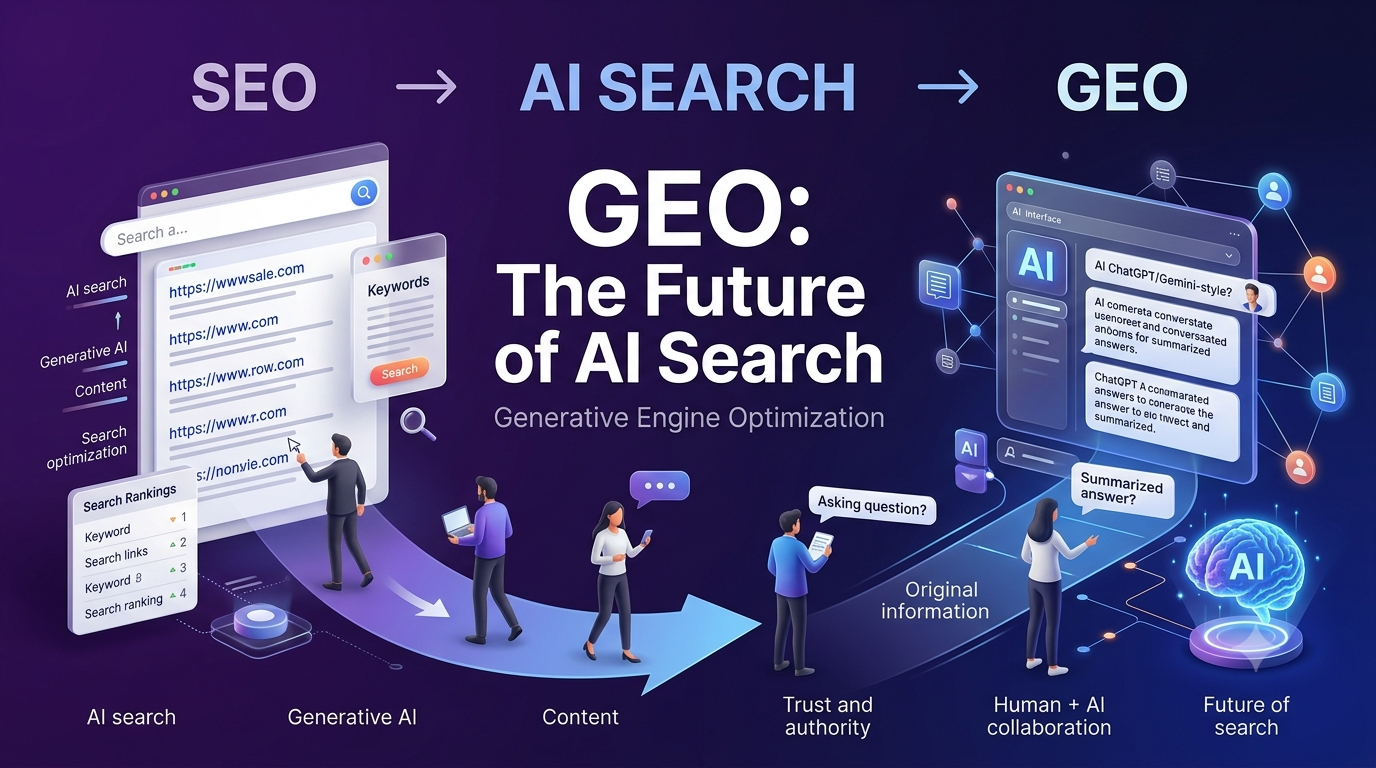
The best way to understand GEO is to look at it next to SEO.
SEO asks:
What should I do to get my web page to rank high for this search?
GEO asks:
What should I do to make my content so useful and clear that an AI system picks it cites it or puts it in its answer?
For example imagine someone searches:
"What are some of the effective digital marketing strategies for a small business?"
With a traditional Google Search the user might see:
- Website A
- Website B
- Website C
- Website D
The goal of SEO is to get your website near the top of those results.
With an AI search the system might instead say something like:
“Small businesses can focus on SEO, social media marketing, email marketing, content marketing and paid advertising…”
The AI can then give a web addresses that back up different parts of that answer.
In this case being number one in the rankings is not everything. Your content also needs to be easy for the AI to find, relevant, believable and helpful to the AI system.
Traditional SEO still matters. Google has made it clear that its AI features use the search systems it already has. This means pages usually need to be indexed and ready for Search before they can show up as links in AI features.
You should think of GEO as a step for modern search rather than a replacement for SEO.
2. Why Did GEO Emerge?
The way people look for information is why GEO appeared.
Traditional search asks users to:
Search ? Look at results ? Click websites ? Read ? Compare info
Generative search can do a lot of that work for you:
Ask ? Find info ? Put it together ? Create answer ? Give sources
For example: Google AI Overviews give a summary made by AI. This summary has the points and links if you want to learn more. Google says these systems mix AI with its Search setup to grab useful info from the web.
This creates a problem for people who make content or market products.
A company might have content that ranks well in normal search but the AI system might:
Use a different source instead;
Mix info from many different places;
Mention the company but not give a clear link;
Summarize what the company said;
Or just not include the company at all.
“If an AI answers the user's question for them, where does my brand fit into that answer?”
This brings up a question about visibility:
What happens to my brand when an AI answers a question for the user?
GEO was created to help deal with that problem.
3. How GEO functions in practice:
There is no GEO checklist that guarantees you will be in an AI answer. Some ideas are becoming very important.
1. Create clear, direct answers
AI systems need to know what a page is about. Of writing a long slow introduction try to give a clear answer right at the start.
For example:
What does email marketing consist of?
A good opening would be:
"Email marketing involves using email to talk to future customers to teach them things build relationships run promotions and make sales".
This definition is easy to get and easy for search engines and AI systems to read.
2. Structure content logically
Use:
Headings;
Short paragraphs;
Bullet points;
Tables when they help;
FAQs;
Definitions;
Step-by-step guides.
When information is well organized it is easier for both people and machines to read.
3. Show expertise and establish credibility
AI systems need info they can trust especially when accuracy matters.
Good signs include:
Expert authors;
Research;
Trusted references;
Correct statistics;
Real-life experience;
Clear business info;
Content that is updated often.
Google still says the important thing is to make content that is helpful reliable and made for people not just to trick search systems.
4. Use language
Do not just use vague marketing words like:
"We provide the best solutions for businesses".
Rather than saying what you do, tell me who it is for and how it works. Specific info gives AI systems material to work with.
5. Build authority
One single article about SEO will not show that you are an expert. A website that has useful pages on a topic will do better. For example a site about SEO should cover:
What is SEO?
Keyword research
On-page SEO
Technical SEO
Link building
Local SEO
SEO tools
SEO analytics
SEO trends
Doing this makes the site a big source of info on that topic.
6. Ensure technical SEO
This is one of the most important parts.
GEO does not mean you should stop doing SEO.
If search engines cannot crawl, understand or index your site then AI systems that use those indexes will have a time finding your content.
Google says its AI Search features rely on its Search systems. This means the usual technical rules and quality standards are still very important.
4. The role of AI and LLMs
Large language models (LLMs) are the foundation upon which search engines are built.
Let's imagine that someone asked the following question:
"User question ? Figuring out the query ? Finding info ? Checking sources ? Putting it all together ? Giving the answer".
Every platform does this a little differently. They usually keep the exact steps a secret.
Google calls its AI Search features "retrieval-augmented generation" (RAG). This means the AI grabs info from its Search index and uses it to help write the answer.
Microsoft does something. They explain that their systems get info from Bing check if it is right and then write a summary that sounds like a human response.
This shows that GEO is not about "writing for ChatGPT." It is about making info that works well in a system that finds thinks about and then writes information.
5. The practical applications of GEO
GEO can help different kinds of groups.
E-commerce:
Imagine someone asks:
When selecting a laptop for the purpose of video editing what should I look for?
An AI answer might talk about specs, brands, products and stores. A laptop maker or seller would want their products and their expert advice to be part of that answer.
Businesses:
Someone might ask:
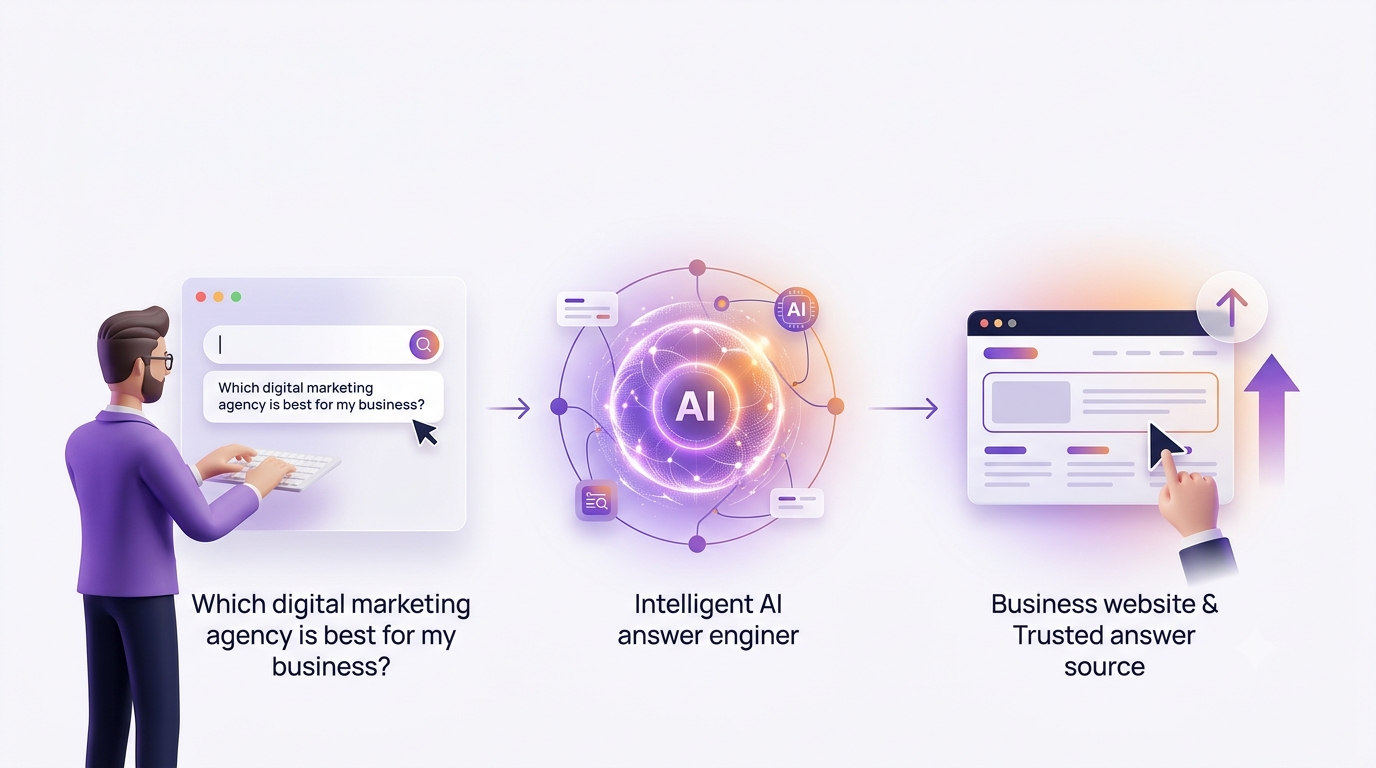
What digital marketing agencies can be considered the best in Thanjavur?
An AI search can pull together info on agencies what they do, reviews, where they're their websites. A local business needs to have steady info on its website and other online spots.
Educational websites
If an educational site explains:
“What is marketing?”
An AI might use that site when answering a beginners question. Content becomes more useful if it has definitions, examples, good structure and reliable info.
B2B companies
A software company might want AI to notice them when people ask:
Which CRM software would be appropriate for a business?
The goal is more than ranking for "CRM software." The company wants the AI to understand its brand, what the product's good at and how it is different, from others.
6. GEO and traditional search engines
GEO and SEO are becoming more linked together.
Google is an example. AI Overviews and AI Mode are part of Google Search. Google says these features use the Search setup they already have.
Microsoft has also mixed Bing ranking with generative AI. Bing says its systems crawl and index pages use machine learning to rank them and then use those results to write answers.
This means you should not choose one or the other. The best plan is:
SEO + GEO:
Technical SEO helps people find your content.
High-quality content makes that content useful.
A clear structure helps machines understand it.
Strong authority makes people trust it.
All these things can help you get included in AI-powered searches.
7. Challenges and Limitations
GEO has some problems.
No ranking formula
Google, Microsoft, OpenAI and other AI platforms all use systems.
There is no number like:
“GEO score = 92”
that will always make you visible.
AI answers can change all the time.
If you ask the question at different times the answer given may vary.
Many things can change the results. These things include all the sources, rankings, models the information provided by the user the location how fresh the data's system updates.
Attribution is still evolving.
An AI system might take information from a website. It might not give that website the same kind of visibility that a normal search result does.
This brings up some questions about:
Website traffic;
Attribution;
Copyright;
Publishercompensation;
Content ownership;
Measurement.
The whole industry is still trying to figure out these issues.
Measurement is difficult.
SEO has metrics that we all know well such as:
Rankings
Impressions;
Clicks;
CTR;
Organic traffic.
But GEO brings up questions:
Was the brand mentioned?
Was the website cited?
Which page was cited?
How often was it cited?
Was its information used without a citation?
Did an AI answer influence a purchase?
These ways of measuring things are still changing. For example Microsoft said in 2026 that Bing Webmaster Tools would add ways to see how content helps AI-generated experiences, including citation and grounding signals.
8. What Should Marketers Do Now?
I think the safest thing to do is not to give up on SEO or try to find GEO hacks.
Instead you should build content that works for people and modern search systems at the same time.
A good GEO strategy is:
1. Keep SEO strong
Make sure your website is easy to crawl, indexable, fast and works well on mobile phones.
2. Answer real questions
Try to understand what your audience actually wants to know.
3. Give answers
Do not hide your information under long boring introductions.
4. Demonstrate expertise
Use your insights, experience, evidence, examples and credible sources to show you know your stuff.
5. Organize information clearly
Use headings, lists, tables, definitions and a logical way to structure your content.
6. Keep information updated
You should especially keep prices, statistics, product information, regulations and industry developments up to date.
7. Build brand authority beyond your website
If you have information on other good websites and platforms it helps people understand your brand online.
8. Monitor AI visibility
Search for questions, in AI-powered search systems. Keep track of whether your brand, website, products or content show up.
0 Comments
No comments yet. Be the first to share your thoughts!
Leave a Comment